
Table of Contents
- Introduction and understanding the broader terms that help in shaping consumer behaviour, with a focus on marketing.
- Definition of key terms
- The Bigger Picture: What Shapes Consumer Behaviour
- Marketing as the Shaper & Amplifier: How marketing influences consumer behaviour
- Conclusion
Introduction
Why do we choose one restaurant over another? Or spend extra on a phone we could get cheaper elsewhere? The answer lies in how marketing shapes our decisions, often without us even realising it. Behind that decision is a mix of need, perception, influence, and trust.
For business owners and brand managers, understanding how marketing influences consumer behaviour is the difference between a campaign that sparks action and one that falls flat.
The truth is, consumer behaviour is never shaped by marketing alone. Decisions are influenced by culture, psychology, personal needs, economics, and social context. Marketing works as the shaper and amplifier of these forces, nudging people toward one choice over another, often without them realising it.
Definition of Key Terms
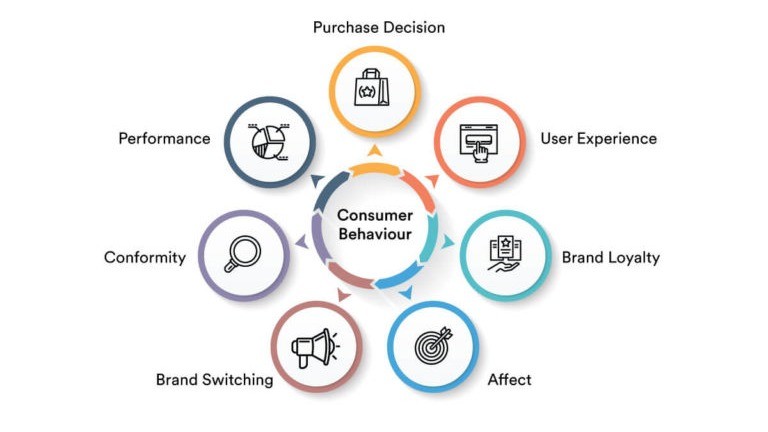
Consumer buying behaviour refers to the actions and decision processes of people as they purchase goods or services. Classic marketing scholars Kotler & Armstrong define it as “the buying behaviour of final consumers, individuals and households, who buy goods and services for personal consumption”. In other words, consumer behaviour studies how and why individuals (or groups and organisations) select, use, and dispose of offerings to satisfy their needs
Simply put, it’s about what drives people from interest to decision.
The Bigger Picture: What Shapes Consumer Behaviour
Before diving into marketing, it’s important to recognise the broader forces that drive consumer choices:
- Cultural & Social Factors: Culture and society set the stage through traditions, family influence, and even social media voices. For instance, during festive seasons in Nigeria, spending naturally increases even without advertising (Detty December).
- Personal & Psychological Factors: Age, lifestyle, income, perception, beliefs, attitudes, and motivation. Example: A young professional may prioritise convenience and speed, while an older consumer may focus on price and trust.
- Economic & Situational Factors: add another layer: inflation, disposable income, weather, moods, and even the time of year shape what people buy. Umbrella and shower cap sales surge in the rainy season, despite the absence of a single billboard.
The Role of Psychology in Action
Consumer behaviour is also explained by models that show why people act the way they do.
Take the Fogg Behaviour Model (B=MAP): behaviour happens when Motivation, Ability, and a Prompt converge.
- Motivation: the desire or need (e.g., stress relief).
- Ability: how easy it is to take action (e.g., one-click booking).
- Prompt: the timely nudge (e.g., a reminder ad on Friday evening).
If I’m motivated to relax after a stressful week, but the spa’s booking form is complicated, I’ll give up. On the other hand, if booking is just one click and I receive a reminder on Friday evening, I’m far more likely to go through with it. That’s why research shows that reducing friction can increase conversions by 35% (Forrester). It also explains why 53% of mobile users abandon a site that takes longer than three seconds to load; ability (ease) matters as much as motivation.
Psychology also shapes how often and where people want to hear from brands. The Cadence × Channel Matrix shows that influence depends on rhythm and placement, not just content. HubSpot reports that businesses posting 3 – 4 times per week on the right channels see double the engagement compared to posting at random. But beyond frequency, channels carry weight: McKinsey found that email is 40 times more effective at acquiring new customers than Facebook or Twitter. At the same time, retargeted ads can lift conversions by up to 150% (Invesp) because they reach people at the exact moment motivation is still alive.
Put simply, consumers act when motivation is high, the path is easy, and the nudge is timely. Effective marketing respects these psychological levers; it doesn’t shout for attention—it gently guides people toward action.
These forces aren’t created by marketing, but they are framed, amplified, and channelled in ways that influence decisions.
Marketing as the Shaper & Amplifier: How marketing influences consumer behaviour
- Perception is Everything: Neuromarketing studies show that perception can actually change how the brain experiences a product; people literally taste wine as ‘better’ when told it’s expensive. Marketing shapes how people see your brand before they ever experience it. A well-crafted campaign can position your product as premium, affordable, aspirational, or even essential. According to Nielsen, 59% of consumers prefer to buy from brands they are familiar with, proving that perception directly influences behaviour. For example, when a wellness brand focuses on storytelling, showing mothers and daughters bonding at a spa, it goes beyond selling a service. It builds an emotional perception: one where memories are made.
- Social Proof Drives Trust: People trust people. That’s why reviews, testimonials, and user-generated content (UGC) are so influential. When consumers see others using and enjoying a product, it reassures them they’re making the right choice. Influencer collaborations, customer stories, and word-of-mouth campaigns are marketing strategies that leverage this behavioural truth. According to BrightLocal, 88% of people trust online reviews as much as personal recommendations. For Gen Z, the effect is even stronger; 97% of them read reviews before buying (PowerReviews). That’s why testimonials, UGC, and influencer content work far better than brand claims alone.
- The Power of Emotional Storytelling: Consumers don’t just buy products, they buy outcomes. Marketing that highlights transformation (“from stressed to relaxed,” “from cluttered to organised”) taps into emotion. And emotion is often stronger than logic in driving decisions.
- Consistency Shapes Habits: The brands that stay top-of-mind are the ones that show up consistently. From social media posts to email marketing, repetition helps to form habits. Over time, the consumer begins to associate your brand with reliability and familiarity. A McKinsey study found that 75% of consumers try new shopping behaviours during times of disruption, but those who encounter consistent brand messaging are 2.4x more likely to stay loyal. Repetition reinforces trust, turning awareness into habit.
- Data-Driven Nudges Matter: Modern marketing is powered by data. Brands that track engagement rates, click-throughs, and audience behaviour can adapt quickly. For instance, when a post underperforms, data helps refine the message or format, leading to better results. Data isn’t just numbers; it’s consumer behaviour in motion.
- Marketing Creates Cultural Relevance: Sometimes, consumer behaviour shifts because of cultural moments. Campaigns that align with trends or conversations without losing authenticity can amplify relevance and connection. However, jumping on the wrong trend can backfire.
Marketing isn’t just about selling; it’s about shaping choices, building trust, and influencing behaviour in subtle yet powerful ways. For consumers, it explains why we gravitate toward certain brands. For businesses, it’s a reminder: every campaign is either building behaviour or breaking it.
At Krysel Brands, we help businesses stop guessing and start making an impact. If you’re ready to build campaigns that actually shift behaviour, let’s talk. Send us an email at ops@kryselbrands.com.